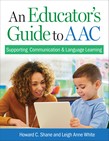
To support communication and language for K-12 students who use AAC, educators need practical, evidence-based strategies they can readily implement in the classroom. That’s what they’ll find in this authoritative guidebook, an ideal professional development resource for special educators and other service providers working with students who are non- or minimally speaking.
Created by AAC pioneer Howard Shane and speech-language pathologist Leigh Anne White, this is the educator’s definitive guide to understanding AAC and improving outcomes for students who use these tools. Inclusive educators, paraprofessionals, and other service providers will learn best practices for leveraging AAC to boost their students’ expressive and receptive communication and language learning competence, with care and respect for each learner’s individual strengths and differences. With a balance of background information and actionable strategies, this book will prepare educators to nurture language and communication skills—and improve quality of life—for students with significant communication needs.
READERS WILL:
Review the seven pragmatic functions of communication
Explore the impact of various disabilities on communication
Learn principles and practices of communication and language assessment for learners who are non- or minimally speaking
Get expert guidance on successfully applying educational and therapeutic interventions in the classroom
Master a three-part framework for using visuals to support students’ comprehension, enhance their language expression, and help them plan and organize learning tasks
Discover tips and strategies for creating a communication-friendly classroom
Leverage AI as a time-saving helpmate to create intervention plans and materials, so that educators can focus more on working with students
About the Online Materials
About the Authors
Foreword
Preface
For the Reader (Authors’ Note)
Chapter 1: The Sounds of Silence
Chapter 2: Everyone Communicates
Chapter 3: Assessment of Speech, Language, and Communication
Chapter 4: Principles of Instruction
Chapter 5: Visual Instruction Mode: Enhancing Language Comprehension through the Intensive Use of Visual Supports
Chapter 6: Visual Expression Mode: Enhancing Language Expression through The Intensive Use of Visual Supports
Chapter 7: Visual Organization Mode: Maximizing Understanding through Visual Supports that Clarify Time, Planning, and Transitions
Chapter 8: The “Communication-Friendly Classroom”
Appendix A: General Preferences Inventory
Appendix B: The Visual Media Interest Profile
Appendix C: Communication Profile
Appendix D: Spoken Vocabulary Inventory
Appendix E: Autism Language Program Concept Inventory
Appendix F: Scene Cue Topics
References
Index