Contact us on (02) 8445 2300
For all customer service and order enquiries

Woodslane Online Catalogues

9781478033226 Academic Inspection Copy

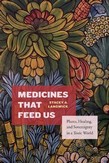
Medicines That Feed Us

Plants, Healing, and Sovereignty in a Toxic World
Description
Author
Biography
Table of
Contents
Reviews
Google
Preview
Medicines That Feed Us examines the relationship between toxicity and remedy in the face of the intertwined health and environmental crises that are shaping life in the twenty-first century. Through ethnographic work with organizations that use plant-based healing and sustainable farming practices in Tanzania, Stacey A. Langwick asks what it means to heal in a toxic world. Expanding on the Kiswahili phrase dawa lishe, or medicines that feed us, Langwick describes the potency of plant medicines in therapeutic projects that address bodies and environments together. These efforts challenge biomedicine's intense focus on the internal dynamics of biological bodies and its externalization of the modern agricultural, industrial, and land management practices that impact it. Dawa lishe is not a call to return to the traditional, but an invitation to join contemporary experiments in how we know, use, and govern therapeutic plants. Medicines That Feed Us offers alternative ways of living and dying, growing and decaying, composing and decomposing which acknowledge the interdependence of bodily and ecological health.
Stacey A. Langwick is Associate Professor of Anthropology at Cornell University, author of Bodies, Politics, and African Healing: The Matter of Maladies in Tanzania, and co-editor of Medicine, Mobility, and Power in Global Africa: Transnational Health and Healing.
Introduction. Healing (in) a Toxic World 1 1. Futures of Lushness 47 2. Efficacy of Appetites 77 3. Registers of Knowledge 117 4. Work of Time 159 5. Properties of Healing 193 Conclusion. Therapeutic Sovereignty 225 Acknowledgments 237 Notes 243 Bibliography 263 Index
"With this beautiful, nuanced ethnography, Stacey Langwick has produced a landmark study of African healing. Medicines that Feed Us takes readers through a set of experiments with plants by which Tanzanians theorize healing through practice in a toxic world. In refusing the false divides between body and environment or medicine and food, this brilliant new book places the deep insights of African theory at the center of how to reckon with toxicity."-Julie Livingston, author of Self-Devouring Growth: A Planetary Parable as Told from Southern Africa
Google Preview content