Contact us on (02) 8445 2300
For all customer service and order enquiries

Woodslane Online Catalogues

9780814787076 Academic Inspection Copy

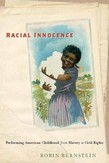
Racial Innocence

Performing American Childhood from Slavery to Civil Rights
Description
Table of
Contents
Google
Preview
Winner, Outstanding Book Award, Association for Theatre in Higher Education Winner, Grace Abbott Best Book Award, Society for the History of Children and Youth Winner, Book Award, Children's Literature Association Winner, Lois P. Rudnick Book Prize, New England American Studies Association Winner, IRSCL Award, International Research Society for Children's Literature Runner-Up, John Hope Franklin Publication Prize, American Studies Association Honorable Mention, Book Award, Society for the Study of American Women Writers Part of the American Literatures Initiative Series In Racial Innocence, Robin Bernstein argues that the concept of "childhood innocence" has been central to U.S. racial formation since the mid-nineteenth century. Children--white ones imbued with innocence, black ones excluded from it, and others of color erased by it--figured pivotally in sharply divergent racial agendas from slavery and abolition to antiblack violence and the early civil rights movement. Bernstein takes up a rich archive including books, toys, theatrical props, and domestic knickknacks which she analyzes as "scriptive things" that invite or prompt historically-located practices while allowing for resistance and social improvisation. Integrating performance studies with literary and visual analysis, Bernstein offers singular readings of theatrical productions from blackface minstrelsy to Uncle Tom's Cabin to The Wonderful Wizard of Oz literary works by Joel Chandler Harris, Harriet Wilson, and Frances Hodgson Burnett; material culture including Topsy pincushions, Uncle Tom and Little Eva handkerchiefs, and Raggedy Ann dolls; and visual texts ranging from fine portraiture to advertisements for lard substitute. Throughout, Bernstein shows how "innocence" gradually became the exclusive province of white children--until the Civil Rights Movement succeeded not only in legally desegregating public spaces, but in culturally desegregating the concept of childhood itself. Check out the author's blog for the book here.
Acknowledgments Introduction: Playing Innocent: Childhood, Race, Performance 1 Tender Angels, Insensate Pickaninnies: The Divergent Paths of Racial Innocence 2 Scriptive Things 3 Everyone Is Impressed: Slavery as a Tender Embrace from Uncle Tom's to Uncle Remus's Cabin 4 The Black-and-Whiteness of Raggedy Ann 5 The Scripts of Black Dolls Notes Index About the Author
Google Preview content